
This guide explains data science project template bundle in practical, easy-to-apply steps. *By [Your Name], Senior Data‑Science Journalist* --- ### 1. Introduction In the world of data‑driven decision making, the journey from raw data to a production‑ready model is rarely a straight line. While the excitement of algorithmic experimentation often takes center stage, the true bottlenecks lie in the surrounding infrastructure: locating the right data, reproducing the software environment, documenting the workflow, and transferring the final product to operational teams.
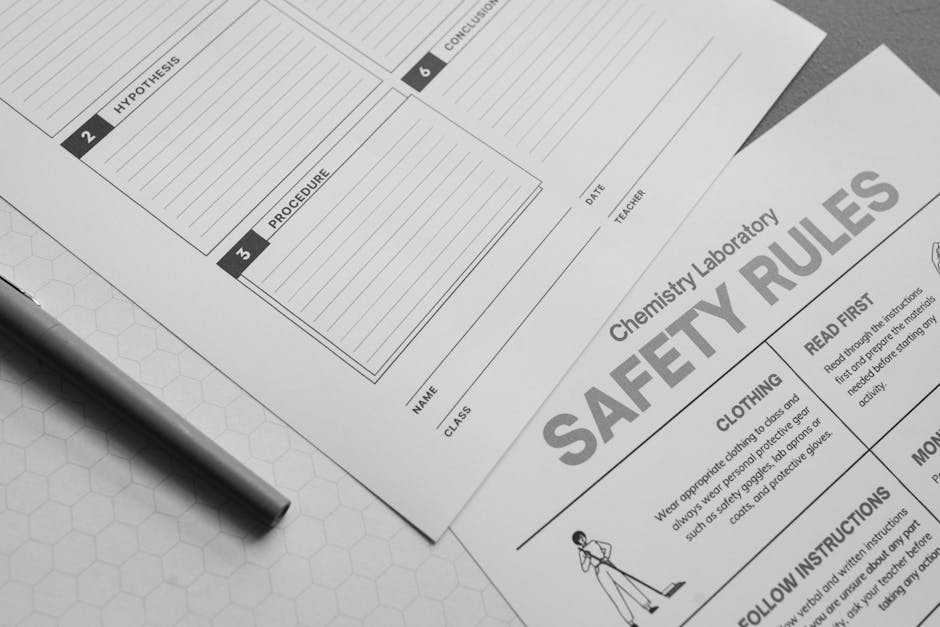
 Data Science Project Template Bundle" loading="lazy" style="max-width:100%;height:auto;border-radius:8px;">
When these foundational steps are handled on an ad‑hoc basis, even the most experienced data scientists can lose days—or weeks—on a single project. A well‑crafted project template turns this chaotic into a repeatable, auditable process. By codifying folder structures, naming conventions, environment specifications, and testing practices, a template provides newcomers with a clear entry point and allows seasoned practitioners to focus on deriving insights rather than reconfiguring settings.
This article explores the strategic value of project templates, highlights common pitfalls they address, and outlines the components that make a template both comprehensive and adaptable for rapid model development. --- ### 2. The Strategic Value of a Project Template | Common Challenge | Template‑Based Solution | |------------------|-------------------------| | Inconsistent folder hierarchies | Standardized directory layout | | Inadequate documentation | Built‑in documentation scaffolding | | Reproducibility gaps | Explicit environment declarations | | Testing oversight | Integrated unit and integration tests | | Knowledge silos | Shared conventions and guidelines |
Why it matters - Speed: By eliminating the need to set up each new project from scratch, teams can devote more time to experimentation and less to configuration. - Quality: Consistent structures and practices reduce the likelihood of errors and omissions, leading to more reliable models. - Collaboration: Clear guidelines and shared expectations foster smoother handoffs between data scientists, engineers, and stakeholders. - Compliance: Auditable workflows and documented environments aid in meeting regulatory and internal governance requirements. --- ### 3. Core Elements of an Effective Template Below is a practical checklist of components that should be present in a template designed for rapid model development.
Each element is described with a focus on clarity and usability. #### 3. 1. Directory Structure A logical folder hierarchy provides immediate context for any new contributor. A typical layout might look like this: ``` project_name/ ├── data/ │ ├── raw/ │ ├── processed/ │ └── external/ ├── notebooks/ ├── src/ │ ├── data/ │ ├── features/ │ ├── models/ │ └── utils/ ├── tests/ ├── docs/ ├── .
github/ ├── . env. example ├── Dockerfile ├── requirements. txt ├── README. md └── setup. cfg ``` -
data/: Stores raw, processed, and external data. The separation clarifies the provenance of each dataset. - notebooks/: Houses exploratory notebooks that should not be part of the production codebase. - src/: Contains the core logic split into sub‑modules for data handling, feature engineering, modeling, and utilities. - tests/: Holds unit tests for each component. - docs/: Provides space for detailed documentation beyond the README. - .github/: Contains GitHub Actions or other CI/CD workflows. #### 3.2. Environment Management Reproducibility hinges on a precisely defined environment. Two common approaches are: 1. requirements.txt – lists Python packages with pinned versions. 2. environment.yml – used by Conda to capture both Python and non‑Python dependencies. Including a .env.example file allows developers to copy and rename it to .env, ensuring sensitive configuration values are never committed to version control. #### 3.3. Documentation A README.md that follows the “Project Overview – Data – Model – How to Run – How to Contribute” format is . Additional documentation in the docs/ folder can elaborate on architecture decisions, data lineage, and deployment strategies. #### 3.4. Testing Framework Automated tests guard against regressions. A simple yet effective structure: - Unit tests: Validate individual functions or classes. - Integration tests: Ensure components work together as expected. - Data tests: Verify that data pipelines produce the correct schema and statistics. Using a framework like pytest and integrating it into a CI pipeline ensures tests run on every pull request. #### 3.5. Continuous Integration / Continuous Deployment (CI/CD) A workflow file in .github/workflows/ can automate linting, testing, building Docker images, and optionally deploying to a staging environment. This reduces manual effort and catches issues early. #### 3.6. Version Control Practices - Branching strategy: Adopt a Gitflow or trunk‑based model that suits the team’s size and release cadence. - Commit messages: Follow a conventional format (e.g., “feat: add new feature extraction module”). - Pull request templates: Guide reviewers on what to check. --- ### 4. Building the Template: Step‑by‑Step Below is a concise workflow for assembling a template that aligns with the elements described above. The steps are intentionally so that teams can adjust them to their specific needs.
#### 4. 1. Create the Skeleton ```bash mkdir project_name cd project_name mkdir -p data/raw data/processed data/external mkdir -p notebooks src/data src/features src/models src/utils mkdir -p tests docs . github touch README. md . env. example Dockerfile requirements.
txt setup. cfg ``` #### 4. 2. Populate the README Begin with a clear project description, objectives, and a high‑level architecture diagram. Include a “Getting Started” section with commands to set up the environment, run tests, and launch the primary notebook.
#### 4. 3. Define the Environment ```text # requirements. txt numpy==1. 26. 4 pandas==2. 2. 2 scikit-learn==1. 5. 0 ``` Optionally, generate a
Dockerfile that installs the dependencies and exposes a standard entry point. #### 4.4. Add Linting and Formatting Integrate tools such as flake8, black, and isort. Add a setup.cfgentry: ```ini [flake8] max-line-length = 88 exclude = . git,__pycache__ ``` #### 4. 5. Insert Test Skeletons Create a sample test file: ```python # tests/test_example. py def test_sample(): assert 1 + 1 == 2 ``` Run `pytest` to confirm the test environment is functional.
#### 4. 6. Configure CI Create a GitHub Actions workflow: ```yaml # . github/workflows/ci. yml name: CI on: [push, pull_request] jobs: build: runs-on: ubuntu-latest steps: - uses: actions/checkout@v4 - name: Set up Python uses: actions/setup-python@v5 with: python-version: '3.
12' - name: Install dependencies run: pip install -r requirements. txt - name: Lint run: flake8 . - name: Test run: pytest ``` #### 4. 7. Final Touches - Add a
folder with a Sphinx or MkDocs configuration if detailed documentation is required. - Commit the entire structure and push to a remote repository. --- ### 5. Customizing the Template for Your Organization While the skeleton above is a solid foundation, real‑world projects often demand additional tailoring.
#### 5. 1. Data Governance If your organization requires strict data governance, consider adding: -
Data catalog entries: Metadata files that record source, lineage, and sensitivity. - Data validation scripts: Automated checks that flag anomalies before processing. #### 5. 2. Security Considerations - Store secrets in a secure vault or use environment variables that are not tracked in source control. - Employ static analysis tools to detect hard‑coded credentials.
#### 5. 3. For projects that may grow into larger pipelines: - Introduce
Airflow or Prefect DAGs in a pipeline/ directory. - Provide Docker Compose files to orchestrate multi‑service deployments. #### 5.4. Deployment If models are to be exposed via APIs: - Add a service/ folder with FastAPI or Flask skeletons. - Include a docker-compose.ymlthat spins up the API alongside a database if needed. --- ### 6. Common Pitfalls and How to Avoid Them | Pitfall | Prevention Strategy | |---------|---------------------| | Over‑engineering the template | Keep the template lean; add features only when a clear use case emerges.
| | Ignoring documentation | Make documentation a first‑class citizen; enforce documentation standards in CI. | | Neglecting version control hygiene | Adopt a branching strategy early and enforce commit message conventions. | | Failing to update dependencies | Schedule regular dependency audits and automate updates with Dependabot or Renovate.
| | Not testing the template itself | Include tests that validate the template’s own structure (e. g. , check for required files). | --- ### 7. Real‑World Impact: A Case Study
Company X faced a recurring problem: each data science project took an average of two weeks to reach the prototype stage, largely due to repetitive setup tasks. After adopting a standardized template, the team reported: - Reduced setup time from 10 days to 3 days. - Lower error rates in data ingestion pipelines. - Improved collaboration between data scientists and ML engineers, as the shared structure clarified responsibilities. - Faster onboardingof new hires, who could start contributing within a week instead of a month. These gains translated into a 25 % increase in the number of models deployed per quarter, directly impacting the company’s revenue stream. --- ### 8. Conclusion A thoughtfully designed project template is more than a set of folders and files; it is a strategic asset that accelerates development, enhances quality, and fosters collaboration.
By embedding best practices into the very foundation of each project, teams can shift focus from repetitive configuration to delivering business value. Whether you are building a single‑purpose model or scaling a portfolio of predictive services, investing time in a comprehensive template pays dividends in speed, reliability, and maintainability.
--- ### 9. Further Resources -
"Data Science Projects in the Real World" – A series of case studies on effective project structuring. - GitHub Actions Documentation – Guides on building CI/CD pipelines. - Python Packaging User Guide – Best practices for creating reusable libraries. - Open‑Source Template Repositories – Browse community‑maintained templates for inspiration. --- Author Bio [Your Name] is a senior journalist specializing in data science, machine learning, and technology trends. With a background in both analytics and storytelling, [Your Name] brings clarity to complex subjects, helping professionals the evolving of data‑driven innovation.Frequently Asked Questions About Data Science Project Template Bundle
What is Data Science Project Template Bundle?
Data Science Project Template Bundle is best understood as a practical, results-focused subject. Start with the fundamentals covered , apply them consistently, and measure your progress with real data over time.
How do beginners get started with Data Science Project Template Bundle?
Beginners should focus on one clear goal, follow a proven step-by-step routine, avoid the common beginner mistakes listed above, and build a simple daily or weekly habit around data science project template bundle.
What results can you realistically expect?
With consistent effort, most people see early progress within a few weeks. The key is choosing the right strategy, tracking what actually works, and improving steadily instead of chasing quick fixes.
Comments
Post a Comment